
You've found a new crack, or a door that suddenly won't latch, and now you're wondering whether the house is moving. That's a fair worry in Garland, because the city sits on clay that swells and shrinks a lot. But most cracks aren't a sign of trouble, and Texas engineers say so in their own guidelines.
What tells you more is the pattern. Where is the crack, which way does it run, and is it changing? On Garland's clay, that last question matters most. A crack that opens every dry August and closes every wet spring is telling you the ground under it is still moving.
This guide shows you how to read the signs, how to measure them yourself, and when it's time to have someone look.
Most cracks don't weaken a house. What matters is the pattern: cracks that taper or step through brick, cracks at the corners of doors and windows, door frames that go out of square, floors that slope, and above all a crack that changes. A U.S. housing standard flags foundation cracks 1/4 inch or wider and 12 inches or longer. Mark your cracks, date them, and compare late summer with late spring. On Garland's clay, a crack that opens every dry summer is a moving one.
Most Cracks Aren't an Emergency
The Texas Section of the American Society of Civil Engineers publishes the guidelines Texas engineers use to judge house foundations. They note that cracks can weaken concrete, but that the majority of cracks don't compromise a structure. The details of each crack are what count.
A federal inspection guide from HUD, the U.S. housing department, adds two useful clues. A clean crack suggests recent movement, while a dirty crack, or one that's been filled before, may no longer be active.
The guide also says to weigh a crack's width against the age of the building. A half-inch crack in a new house may mean fast settling. In a 50-year-old house, the same crack may have opened at about 1/100 of an inch a year.
That's worth knowing in Garland, where the median home was built in 1978. A wide old crack isn't automatically urgent. The question is whether it's still moving, and the rest of this guide helps you find out.
The Signs Engineers Look For
The Texas guidelines list the visible signs of a foundation that isn't performing well. In plain terms, they fall into two groups.
Outside the house:
- Cracks in brick, especially ones that step up along the mortar joints
- Brick separating from window and door frames, or panels of brick that lean
- Cracks in the concrete of the foundation itself
Inside the house:
- Cracks in drywall walls and ceilings
- Walls pulling away from the ceiling or the floor
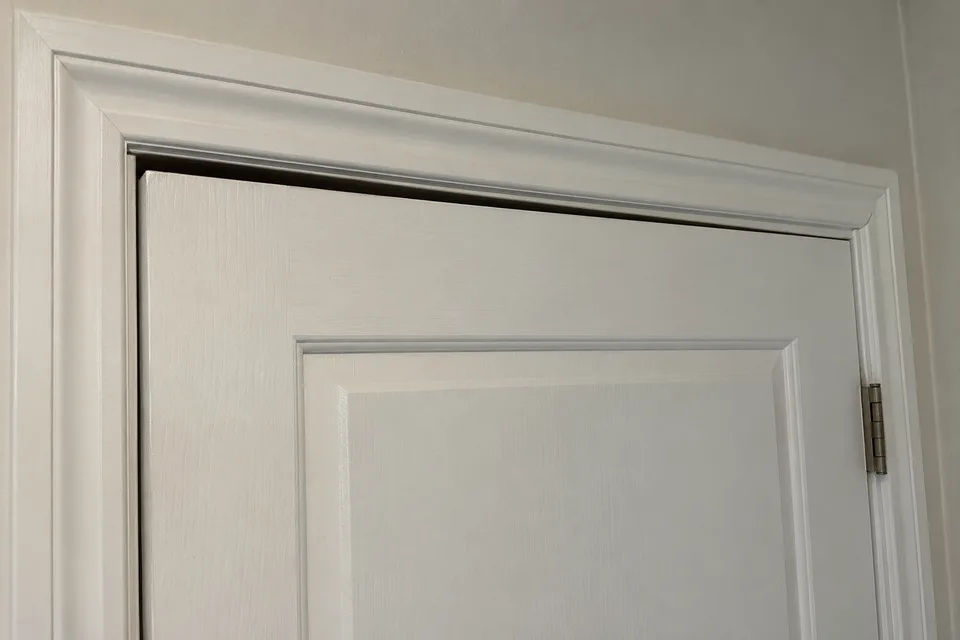
- Door and window frames going out of square, so doors stick or won't latch
- Floor tile cracking, or flooring buckling or separating
- Joints that used to be tight opening up, like trim corners and backsplashes
The guidelines add an important caution. Seeing some of these doesn't necessarily mean the foundation is failing. One sign on its own is a reason to watch. Several at once, in different parts of the house, make a pattern.
Direction and place matter as much as size
The HUD guide describes how settlement cracks look. When part of a wall settles quickly, the crack tapers, wide at one end and fading to a hairline at the other. It usually runs on a rough diagonal through the mortar, and it shows up most at corners and next to doors and windows.
That's why a tapered crack running up from the corner of a door frame deserves more attention than a wider crack of even width in the middle of a wall. Pair it with a door that's started to stick, and you have a pattern.
Doors and windows often speak first
Plenty of people notice a sticking door months before they notice a crack. When part of the slab rises or drops, the wall above leans slightly out of line, and a door that used to swing cleanly starts to catch at a top corner. Windows stop sliding or won't lock.
Humidity can do this for a while too. If the door still sticks after the season changes, the house has more likely moved.
Crack Width: Where the Line Is
You don't need tools to make a first judgment. A hairline crack, the kind you can see but can't fit anything into, is common and rarely a concern on its own.
At the other end, HUD's inspection standard for housing flags a foundation crack that's 1/4 inch or wider and 12 inches or longer. That's a sensible line for a homeowner too. A crack that size is worth a professional look, especially in brick or in the slab edge.
Anything between those two is worth marking and watching. Width tells you how far something has moved. It doesn't tell you whether it's still moving, and that's what the next two sections are for.
Crack width: what the numbers mean
- HairlineCommonRarely a concern on its own.
- Under 1/4 inchMark it and watch itCheck it against your pencil marks each month.
- 1/4 inch or widerWorth a professional lookAt 12 inches or longer, HUD's housing inspections flag it.
- Wider at one end? That taper matters more than width alone.
Mark It and Date It
This takes two minutes and a pencil, and it's the most useful record you can keep.
- Draw a short pencil line across each end of the crack.
- Write the date beside it.
- Measure the width at the widest point and write that down too.
- Take a photo with a ruler or tape measure held next to it.
- Check it once a month.
If the crack stays inside your marks for a year, it happened and stopped. If it creeps past them, the movement is still going on. That difference changes what any engineer will recommend, and a single visit can't show it.
Be patient with it. The HUD guide points out that movement that comes and goes with the seasons can take six months or more to measure.
The Seasonal Test: Late Summer Against Late Spring
This is the check that matters most on Garland's clay. Clay shrinks as it dries and swells as it wets, and our guide to Garland's soil shows how much the city's main soils move.
The weather sets the rhythm. NOAA's 30-year averages for Dallas Love Field show July as the driest month, with 1.71 inches of rain, and August as the hottest, with an average high of 97.1°F. May brings 4.57 inches, and October is wetter still. So the ground under your house is usually at its driest in late summer and wettest after the spring rains.
That gives you two dates to check every crack you've marked:
- Late August or September, after the driest, hottest stretch
- Late May or June, after the spring rains
A crack that opens in late summer and closes again by late spring is following the soil. That's live movement, whatever its width says.
One caution keeps this test honest. The HUD guide points out that some drywall cracks open and close with the seasons because the house's own materials move with heat and humidity. The soil is the more likely cause when the brick outside, the doors and the drywall all change in the same season.
It's also why a single inspection can under-read a house. Someone who visits in spring, after months of rain, sees a slab pushed back up and cracks partly closed. The same house in September can look much worse. The Texas guidelines make the same point about floor surveys: one survey shows how a foundation sits at one moment, and repeated surveys over months show how it's changing.
Floors: Measure, Don't Guess
Rolling a marble across the floor won't tell you much, because almost every floor slopes a little. The Texas guidelines say plainly that foundations are built with some differences in level, so a single reading proves little on its own.
Measuring is easy, though. A free level app on any phone reads the tilt in degrees. Lay the phone flat in the same spots in each room, write down the readings, and repeat them when you check your cracks.
Here's what the numbers mean. The Texas guidelines say a tilt greater than 1% is usually noticeable. That's about 1.2 inches over 10 feet, or a little over half a degree on a phone. For comparison, the Americans with Disabilities Act treats a 2% slope as too steep.
Engineers also look at how much a floor bows between two points. The usual limit they compare against is the span divided by 360, which works out to about 1 inch across 30 feet. That takes a proper floor height survey to measure, so it's best left to whoever inspects the house.
If one corner of a room reads very differently from the rest, that's worth noting. If the readings change between your summer and spring checks, that matters more.
Rule Out a Leak
A leaking pipe under the slab keeps one patch of clay wet all year, and the signs it causes can look just like soil movement. One check costs nothing. The EPA's WaterSense program suggests reading your water meter, using no water at all for two hours, then reading it again. If the meter moved, you probably have a leak somewhere.
That test only catches leaks in the supply lines, which are always under pressure. A cracked drain line under the slab only leaks when water runs down it, so it takes a plumber's test to find.
When It's Time to Call Someone
Any one of these is a good reason to get the house looked at:
- Several new cracks at once, in different parts of the house
- A crack 1/4 inch or wider and 12 inches or longer, especially in brick
- A crack that grows past your pencil marks, or opens and closes with the seasons
- A door or window frame that's clearly out of square, along with cracks near it
- A floor tilt you can see, or one your phone puts near half a degree
A good first step is a foundation inspection, with floor height readings and the findings in writing. Bring your dated records and photos. They're the one thing an inspector can't gather in a single visit.
If the inspection does point to repair, an engineer will be part of it, and our guide to the repair process explains how that works in Garland. While you watch a crack, it's also worth sorting out water pooling beside the house, since it's one of the most common causes. The fixes, from downspouts to grading, are in our foundation watering guide.
Foundation Warning Sign Questions
Are all foundation cracks a sign of a serious problem?
No. The Texas engineers' guidelines note that most cracks don't compromise a structure. Hairline cracks are common. What raises concern is a crack 1/4 inch or wider, one that tapers, several appearing at once, or any crack that keeps changing.
Which cracks are serious and which are cosmetic?
Cosmetic cracks are fine, even in width, stable over time, and limited to drywall or paint. More serious ones taper, step through brick mortar, sit at the corners of doors and windows, or come with doors that have started sticking.
Why do my doors and windows suddenly stick?
Usually because the frame is no longer square. When part of a slab lifts or drops, the wall above it leans slightly, and a door starts to catch. Humidity can do it for a while. If it lasts through a change of season, suspect movement.
How much does a floor have to slope before it is a problem?
The Texas guidelines say a tilt greater than 1% is usually noticeable. That's about 1.2 inches over 10 feet, or a little over half a degree on a phone level. A change between seasons tells you more than any single reading.
Should I worry more in summer or after heavy rain?
Watch both, because the difference between them is the clue. Clay shrinks through the dry, hot late summer and swells after spring rain. A crack that opens in September and closes by June is one that's still moving.