
Garland, Texas · Slab foundations
Slab Foundation Repair in Garland, TX
Free inspections. Written findings. No obligation.
If your house sits on a concrete slab and you're seeing new cracks, you're in good company in Garland. Most homes in the city sit on a slab poured straight onto the ground. When the clay under it dries and shrinks, the slab loses support at the edge and the house settles unevenly. Slab foundation repair lifts the settled part back up and holds it there on piers that reach steadier ground.
Published Dallas Fort Worth range for foundation repair: $3,338-$7,118. What drives the price
- Free inspectionIt costs nothing
- Written findingsMeasured, then put in writing
- Engineer-sealed plansThe engineer's plan goes to the city
- No obligationStopping after the inspection is fine
Tell us what you're seeing
Census figures put 63.3% of Garland's 84,954 homes in the 1960 to 1989 build window, and the USDA soil survey finds Houston Black and Ferris clay under about half the city. Both rate "very high" for shrink and swell. So a great many Garland slabs rest on clay that rarely sits still for long.
Why Garland Slabs Settle at the Edges
A slab rarely drops in the middle. It drops around the outside.
The soil at the edge of the house gets the sun, the wind and the tree roots, so it dries first and hardest. The soil under the center stays shaded and damp much longer. Through a hot North Texas August, the edge shrinks away while the middle stays put, and the slab is left spanning a gap it was never built to span. That's why pier work focuses on the perimeter.
Slab and pier and beam foundations, in cross-section
Slab foundation
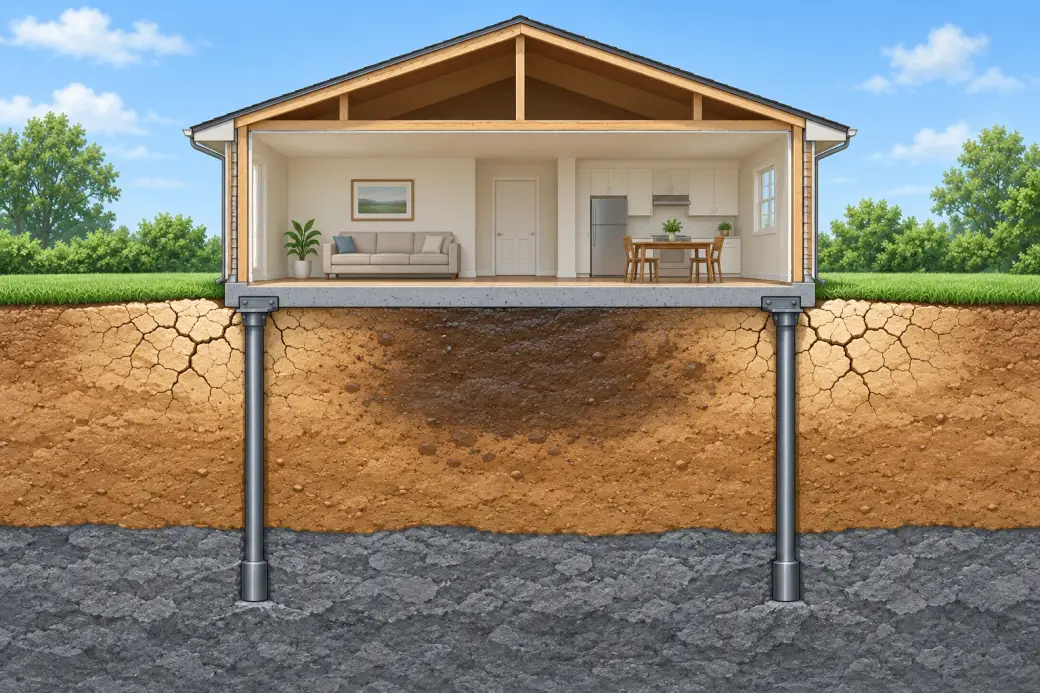
- Concrete slab poured on the ground
- Edge soil dries first
- Soil under the middle stays damp longer
- Repair piers reach stable ground
Pier and beam foundation
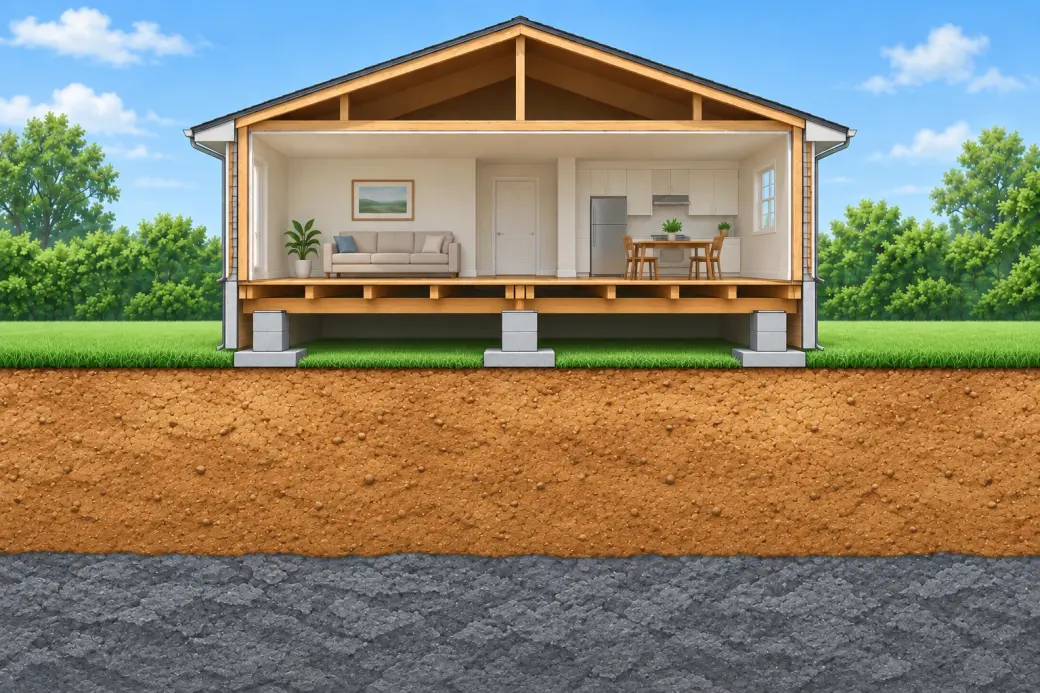
- Floor
- Wooden beams carry the floor
- Beams rest on piers
- Crawl space
Signs a Slab Needs Piers
Not every crack means piers. These are the signs that usually do:
- A door that has gone out of square, sticking at one corner
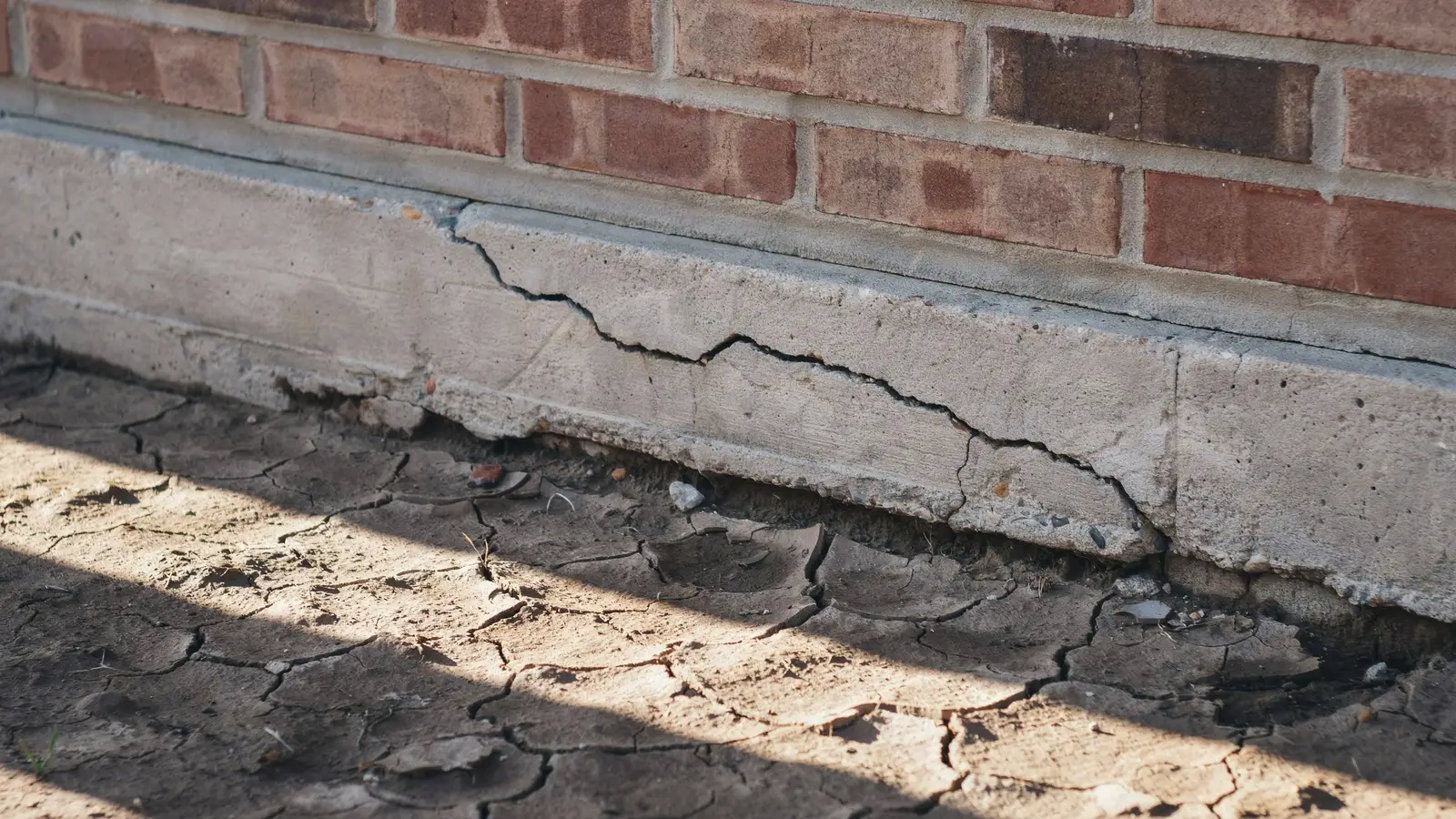
- Stair-step cracks in outside brick that widen toward the top
- A gap opening where the brick meets the slab edge
- Floors that measure out of level, not just a feeling underfoot
- Cracks coming back after they've been patched
That last one matters most. A crack that comes back means the house is still moving, and patching a moving slab means paying for the same repair twice.
What Slab Foundation Repair Involves
Piers along the low side. The crew digs access holes where the engineer's plan marks them, then drives pier sections down until they reach ground that will carry the load. Pier depth can differ from one lot to the next, even on the same street.
One wall, or the whole house. Most jobs are sectional: piers go in along the part that dropped. Whole-house leveling applies when the floor readings show the house out of level across several rooms. The readings decide which you need.
A slow lift. Hydraulic jacks raise the slab back toward its old height, a little at a time, because lifting fast cracks plumbing, drywall and brick. The goal is a house that's stable and within tolerance, not perfectly level.
Care with post-tension slabs. About a quarter of Garland homes were built in 1990 or later, and those are more likely to hold post-tension cable, under heavy load inside the concrete. Nobody should drill into them blind.
What Slab Repair Costs in Garland
Angi's survey of its Dallas customers puts typical foundation repair at $3,338 to $7,118. Two Dallas-Fort Worth repair companies that publish prices put a single pier at roughly $1,000 to $4,000, depending on type and depth.
Where your job lands comes down to:
- How many piers the engineer specifies, and how deep they go
- Whether the crew works from outside or has to come through the floor
- Whether it's one wall or the whole house
- Whether drainage or a plumbing test belongs in the job
So a fair quote comes after someone measures your floors. To see how a quote adds up, read our foundation repair cost guide.
Why Call Us First
We don't send a crew of our own. When you call or send the form, we pass your request to one independent local foundation pro who serves your area. That pro does the inspection and any repair, and may pay us for the request. You never pay us anything.
What you get from us is a head start. Our pages set out what a sound slab repair includes in Garland, so you can hold any quote up against that list, including the one you get through us. And the phone is picked up day and night.
Start to Finish: How a Slab Repair Runs
1. You call or send the form. Tell us what you're seeing. Plain words are fine.
2. A free inspection. Floor heights are measured room by room, and someone checks the brick, the slab edge and where the water goes. You get the findings in writing. Plenty of people learn the movement is normal for this soil and stop there.
3. The engineer and the permit. A free inspection isn't an engineer's report. If repair is needed, a Texas licensed engineer specifies the piers, and Garland requires a permit once the work is worth $2,000, with the engineer's letter and a stamped pier diagram.
4. The repair. Most home pier jobs take one to three days on site.
5. Closing out. The engineer's final report goes to the city, and the permit closes.
Slab Foundation Repair Questions
What does Garland charge for the permit?
The fee is $45, which is $30 plus a $15 processing fee. Building Inspection can confirm the current rules at 972-205-2300.
Will the cracks close up?
Some do, partly. A lift brings the house back toward level, which closes many cracks. It's wise to plan on some cosmetic patching afterward.
Can I just patch the crack instead?
You can, but it'll come back if the slab is still moving. It's worth finding out whether the house is moving first.
Get a Free Slab Inspection in Garland
Tell us what you're seeing. Someone will measure it, put the findings in writing, and walk you through your options. There's no charge, and nothing commits you to a repair.
We work across Garland, Rowlett, Mesquite, Richardson and nearby cities. Older homes with a crawl space have their own page: pier and beam repair.
Tell us what you're seeing